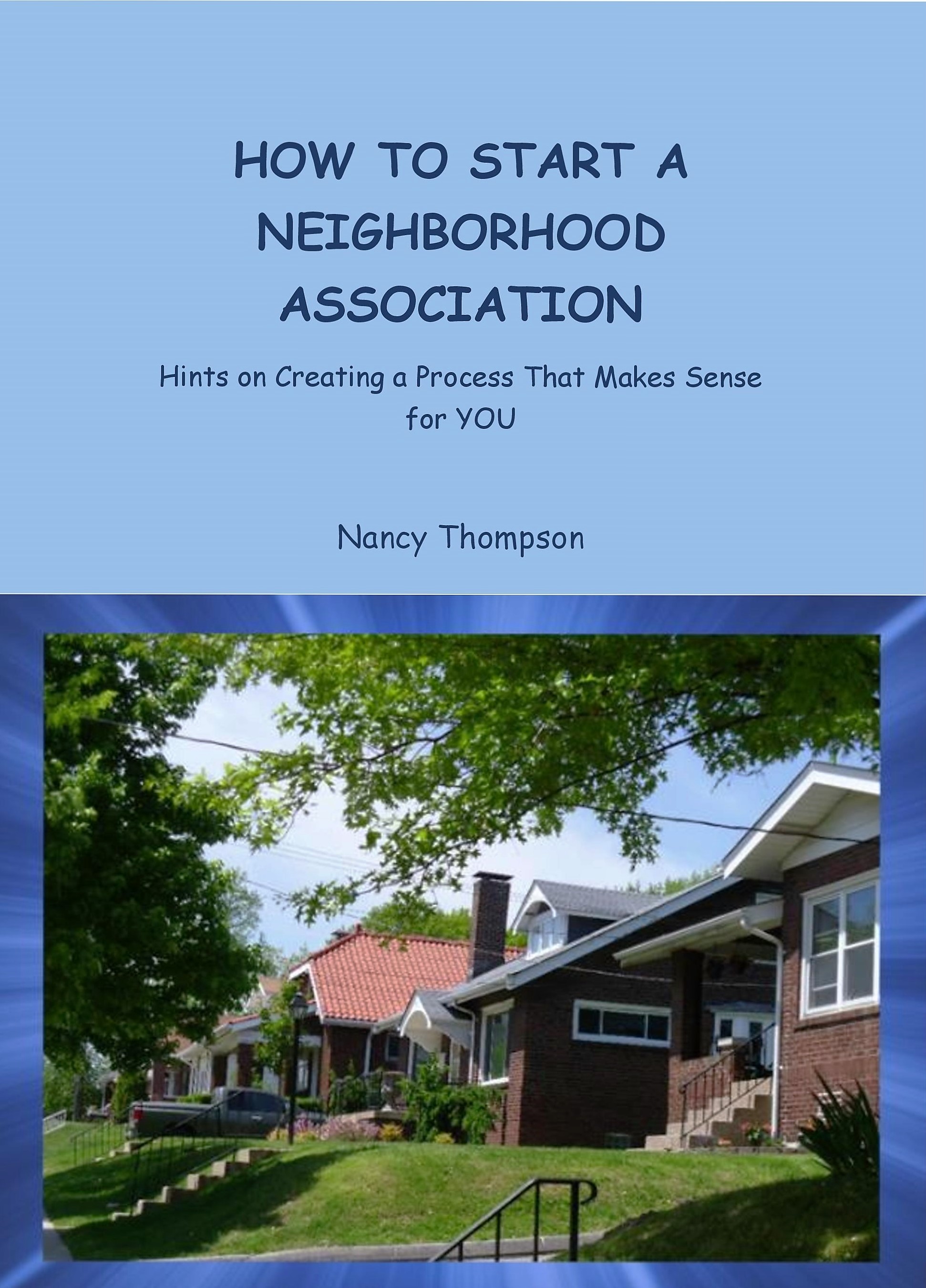
Community Beautification Lifts Spirits and Property Values
Last Updated: August 28, 2023
Community beautification should be high on your agenda as a local leader or a neighborhood or community organization. This section of the website suggests simple projects such as picking up trash in the spring, planting colorful flowers or shrubs, or painting planters, benches, sign posts, or whatever is beginning to look tired. Our experience is that volunteer-led projects such as these are one of the quickest and least expensive ways to inspire more community spirit and civic action.
Admittedly, there are no easy fixes for some community appearance challenges. This section is organized into nine opportunities and seven challenges for beautification.

A visually appealing community increases property values, attracts
businesses, and improves the neighborhood's image. Beauty is one of the three most influential factors in community attachment, which means loyalty, to your particular town or city.
Some research even shows that a nice-looking neighborhood promotes good behavior. (This article continues after the grid, beginning with easier projects.)
Opportunities: Cleaning Up Your Neighborhood Park -- Community Mural -- Urban Design Principles -- Neighborhood Character -- Art in Public Places -- Off-Leash Dog Park -- Streetscape -- Parklet -- Tree Canopy
Challenges: Abandoned Buildings -- Big Box Stores -- Sign Regulation -- Ugly Chain Link Fence -- Alleys -- Office Towers -- Small Cell Technology Appearance
Opportunities Described in This Section




Possible Challenges for Community Appearance


Easy Volunteer Community Beautification Projects
To get started with beautification, you might create an opportunity to organize private citizens into their own little community beautification campaign or organization. We have found that neighbors try to out-do one another in installing great-looking window boxes, for example. A common planting palette (a menu of plant choices) in a neighborhood is attractive, for instance, if you choose an assortment of plants with a common color or theme.
Your block, or the block unit or club, could sponsor simple garden strips or beds to attract butterflies, hummingbirds, or pollinators. In one neighborhood where we worked, simply planting the strip between the sidewalks and the street with an assortment of flowering plants recommended by the local extension office yielded spectacular results. Getting the kids involved was a key to success; the adults followed, skeptically at first and then enthusiastically.
A tree planting project, either on a vacant lot, in a park, or in the parkway between the sidewalk and the street, is great for improving community appearance over the course of a few years at a relatively low cost. If you happen to live in a subdivision or condo development where the developer neglected to plant trees, you might focus your effort on making sure home owners select and plant appropriate trees to eventually give you a much healthier and more beautiful place to live.
One of our site visitors asked about organizing a collaboration with landlords to beautify their premises. See our answer at that link.
Volunteer projects provide some building blocks of the positive part of community appearance. Now let's check out how cleaning up some visual liabilities can be important.
Clean-Ups as Beautification
Eyesores in your community are a little bit like the squeaky door at your house. If you let them go long enough, you no longer "see" them.
It always amazes me as a consultant to go meet with an earnest board of directors who have been ignoring ugliness on Main Street for 15 or 20 years. They look at each other sheepishly when I point it out. Try not be that community--just face the music and know you need to do something about it.
Denial does not help. Newcomers and visitors will not join you in overlooking the obvious.
An easy first win, if you've never done a beautification event, is cleaning up your neighborhood park.
Sometimes the first beautification project should be cleaning up your river or stream. Litter collects on the banks and then ultimately in the water, especially when no trash cans are provided.
If you've done a clean-up project already, please share it with the rest of us, tell us your best lessons in keeping it organized, and brag about your volunteers a little bit right on the Internet.
We have forms where you can write a paragraph or so (more if you like), and send photos if you have them, on each of these topics: derelict property clean-up, stream clean-up, park clean-up, or alley clean-up.
The great thing about these projects is that usually the village, town, or city will help you dispose of the trash that your volunteers collect, at a minimum. If they aren't in the habit of regular maintenance, they may be shocked at the volume of trash, but their sense of honor will make them haul it away, even if it takes a few days.
Assessing Community Design Factors
Now let's move to some more advanced considerations about the long-term appearance of your neighborhood. First we'll lay the groundwork for the positive vision you will want to aspire to. Then we'll talk about some things that detract from the beauty of your community and how to handle them.
To make your neighborhood look great, it is very helpful to understand some urban design
principles. When people take what are called visual preference surveys,
usually the results are lop-sided. In this technique, participants are
simply asked which photo of a similar type of street scene or building
they prefer. Often these show an amount of agreement that amazes the event organizers. So we can confidently predict that aside from a few cultural oddities, there are some universals you will want to consider.
We cover some of these universals that we personally have observed in a super-brief introduction to urban design principles. The truth is that people who say they do not care about community design actually do.
If your neighborhood is completely built up, you often cannot alter the most critical parts of community design, but it's good to be aware of them and do what you can to encourage a pleasing design through zoning and other means.
People really prefer some compatibility of architectural styles. Although most people couldn't tell you this off the top of the head, they like the fronts of houses on a block to line up, within a certain degree of tolerance. They appreciate similar building heights, even though they probably couldn't verbalize this. By the way, they like buildings close to the street too.
People prefer a vibrant scene with some personality over blandness. The trick is not overdoing the variation, unless you are in a true city where layers and layers of complexity are piled on top of one another.
Are these preferences constant for every place and every time? No, but they are usually fairly enduring over the course of a couple of decades. We suggest taking community appearance issues seriously.
Everything does not have to be perfect to have a pleasing neighborhood character. Just have a critical mass of pleasant elements, and unless your eyesores are really bad, the neighborhood still will be well liked. Make your neighborhood just a little bit distinctive.
The right balance between monotony and repetition of similar design elements in a community is important.
It's very pleasant to stroll down a block of three-story brick houses with similar setbacks from the street. The brick may be different colors, the landscaping quite contrasting, the side yards varied, and the window patterns unique, but if the height, material, and front yard setback are similar, the neighborhood will feel great.
However, if every house has the same brick, window placement, and driveway arrangement, the block may be too boring. Many real estate developers now seem to think that the paint and shingles in the same color are cheaper by the dozen, and that having to look at the street number to find your own house won't matter to people. That's not really so.
Design for Smaller Communities
Because we're using the term urban design, you may not think design for small cities and towns is critically important. In fact, in non-metropolitan parts of the country, small town character is what distinguishes one town from another.
If you live in such an area, you've probably heard it said that one town is junky, another town is so well-kept, and so forth. These statements reflect not only property maintenance norms but also the original design smarts.
If your original design was tacky, that's where a beautification campaign to distract the eye becomes critical. Also you will need to create a vision of what is desirable so that the limited number of redevelopment or infill opportunities that come your way can create maximum visual impact.
Streetscape: A Common But Often Expensive Fix-Up Technique
To improve community appearance, neighborhoods often try to update what is known as streetscape, which pertains to the area between the driving lanes and the edge of the private property.
Partly this is a popular strategy because it is public space, and it's easy for the government to dictate what will happen there.
In truth, streetscape can be quite effective in uniting block faces (the half of a block facing a particular street) or a series of blocks that are discordant in some way. Because streetscape often includes plantings and well-chosen street trees, the effect is to soften the view created by streets, parking lanes, and the sidewalks that we hope you have.
Care in the choice of materials and in the quality of the installation makes all the difference in this form of beautification. Try not to choose exactly the same thing as the next neighborhood, because streetscape lends neighborhood identity as well.
The Need for Focal Points in Community Design
In addition to streetscape, sometimes you need a focal point. Good architecture should take care of this, but since many communities are not posh enough to attract the best architecture, you may have to take a beautification approach. This might be public art, a clock tower, or even a particularly striking garden or grouping of tall grasses. Especially for smaller towns or neighborhoods trying to create an identity, we are big fans of at least one striking community mural.
For inspiration, you also could look to little stories that our site visitors have submitted about public fountains and amphitheaters. Both may be expensive projects, but low budget alternatives may work well in your situation, especially if you have a "natural amphitheater."
Like all forms of community development, beautification benefits from thinking in terms of critical mass. If you already have a lonely statue with nothing around it, maybe you should add planting beds of considerable size, an inviting bench or two, and maybe an interpretive sign explaining "the rest of the story" that can't be told on the bronze plaque.
Just to keep you from being all too serious about the aesthetics of your neighborhood, we thought we'd add a page about the off leash dog park phenomenon on this section of the website. Often these are pretty ugly, but as our page shows, sometimes they can be visual assets.
Abandoned Buildings Should Top Your List of Negatives
Abandoned buildings, by which I mean buildings that aren't in use, maintained, or for sale or lease, give a really negative impression. It says that the owner doesn't believe in your community enough to even try to renovate, rent, or sell.
Think about that--someone invested money to buy real estate but now doesn't think it's worth their time, trouble, or money to make use of the property.
An abandoned lot is pretty bad too. It's a gathering place for people or kids who are up to no good. It seems to attract debris because people feel comfortable dumping there. People sense when no one cares.
Code enforcement should always be your first line of defense. In most places, you can call in a complaint to your city or village government, providing they have a "code" (law) that can be enforced. The property owner will be the one held responsible for cleaning up the lot or building, even though he or she may not be the one doing the littering. But you can't be sentimental--you have to get that lot or building cleaned up.
Sometimes the first beautification project should be cleaning up your river or stream. Litter collects on the banks and then ultimately in the water, especially when no trash cans are provided.
The good thing about these projects is that usually the village, town, or city will help you dispose of the trash that your volunteers collect, at a minimum. If they aren't in the habit of regular maintenance, they may be shocked at the volume of trash, but their sense of honor will make them haul it away, even if it takes a few days.
Vacant Land or Buildings
Let's say that you have vacant land or vacant commercial buildings that are not "abandoned," as we described earlier. In other words, someone regularly picks up the trash, mows the grass, and tries to rent or sell the property.
I hate to tell you, but that vacancy still might be a problem. Two vacant lots in a row showing the footprints of old buildings makes us wonder about that block, even if the lots are otherwise neat as a pin.
The beautification project of choice for vacant lots is clean-up, planting, and sometimes uniform fencing.
In the case of residential lots, you need to actively seek infill housing projects.
Vacant commercial buildings need to look occupied, so if that means blinds on the windows, someone's teapot collection in the storefront, or a few desks and chairs in space that should be office space, you in the neighborhood organization might find it worthwhile to take these steps. Try to talk the property owner into it, but if you can't, see if they will allow you to do so. Another viable tactic is working with property owners to promote very short-term leases to pop-up businesses that want to try something new for a short time.
Alleys: Eyesores into Assets
If your neighborhood has alleys, they too seem to be a magnet for trash. Alleys can be positive because they keep the number of automobiles parking on the street down. They also provide realistic spaces for dumpsters and thus relegate garbage collection to the rear of the house.
Beautification isn't easy, but tidy them up and perhaps make them green. The alleys or alley clean up pages will lead to plenty of ideas.
More Potential Eyesores Await Your Beautification
Now you're ready to consider sources of ugliness or mediocrity. We'd like to refer you to some resources for four of these:
• Signs and visual clutter. Every business thinks they are entitled to a sign, and they compete to outdo each other in size and garishness. Before you get too critical, wouldn't you be the same? Wouldn't you want the biggest, baddest, reddest sign on the block if your livelihood depended on attracting customers?
Eliminating sign clutter is hard work, but it pays dividends even more surely than a positive beautification campaign.
• Small cell technology. Whether mounted on a utility pole or positioned on a building, sidewalk, or elsewhere on the ground, the boxes that will bring us wonderful 5G internet and phone service have the potential to be real eyesores if the city government or the neighborhood association fails to watch as this technology is rolled out. If this hasn't happened yet in your community, do read our page to learn about your options, if any.
• Big box stores. You might not be familiar with the term but you know big boxes if you are in a Western culture. These are the large stores, usually furniture, discount, or electronics stores, with an even larger parking lot surrounding them. Although they might have other smaller stores in their out-lots, many are freestanding.
The problems are three: (a) the large and often unattractive parking lot causing the loss of pedestrian scale along the street, (b) a large building that is undistinguished architecturally lowering standards for other nearby commercial buildings and cheapening the appearance of the community, and (c) the planned obsolescence of these stores in 10-15 years, plus ordinary business failure, means that they frequently move or go out of business, leaving you with a very large space to try to rent, refurbish, or re-purpose.
• Office towers. The office tower also presents the problem of the large parking lot, thus interrupting any possibility of street life along the road leading to it. In addition, many are extremely uncreative and lack any hint of human ingenuity and variety. They contribute to blandness in community life.
Beautification of big boxes and office towers requires significant new amenities to create distractions and offset the bulk of cheaply produced large buildings.
• Ugly chain link fences. This is just the beginning of our planned "ugly" series, but this one is common to both suburban and urban neighborhoods. In good condition, they are practical indeed. The problem becomes rust and poor maintenance.
Make Good Maintenance the Hallmark of the Community
As we've seen, prevention of community design problems is essential to outstanding community appearance. That's related to your zoning, your restrictive covenants, and the quality of real estate developers that you allow to work in your community.
Although removing the negatives through clean ups is a great community building exercise, the best beautification campaigns might have been better as prevention campaigns.
If you raise consciousness about the value of community appearance in keeping the neighborhood economically viable, beautification will become a fun project instead of an obligation. If you need justification, see our answer to a visitor question about the importance of community beautification.

Join USEFUL COMMUNITY PLUS, which provides you monthly with short features or tips about timely topics for neighborhoods, towns and cities, community organizations, rural environments, and our international friends. Unsubscribe any time. Give it a try.
Recent Articles


-
What is the smallest lot size we should have in our suburb?
Apr 20, 24 10:50 AM
April 15, 2024 Visitor Question: We are a typical American suburb developed in the 1950s and 1960s. Our climate is moderate and our city is thriving economically. -
What should we do about an ugly bioswale?
Apr 19, 24 01:32 PM
April 19, 2024 Visitor Question: Our town wanted to have some better flood control along a creek that is ordinarily very small. The problem is that -
Project Selection in Neighborhood Associations
Apr 03, 24 01:41 PM
 Many neighborhood associations should limit their activities to sharpen their focus. However, some community organizations need more projects to add excitement.