Housing Demand Determines
Neighborhood Quality

Last Updated: September 7, 2023
Housing quality is what makes a community considered attractive or a place to be avoided. At least locally, it creates your neighborhood brand. In turn your neighborhood image enhances or detracts from property values and your capability of attracting needed businesses and quality educational and cultural offerings.
Whether your neighborhood problem is lack of demand for housing or so much demand that your prices are sky-high, in this section of the website I share many experiences with housing issues I have encountered in the course of an urban planning career.
Outstanding maintenance and compatible architecture that allows for some variety, rather than a completely homogeneous stock, usually are the keys to a great place.
If you're in a rural area and you think that a little rusty manufactured housing doesn't matter, you would be wrong. If you live in a city neighborhood with a few crumbling buildings, that goes double. We will have much more to say about those issues later in the article.
Below are the topic areas included in this section. This article resumes after the grid. If you don't know where to click, try using the site search box at the top of the page.
Topics in This Section: Abandoned Homes -- Gentrification -- Home Affordability -- Housing Decline -- Neighborhood Revitalization -- Non-Profit Developers -- Urban Community Land Trusts -- Cluster Homes -- Homelessness -- Mixed-Income -- Accessory Dwelling Units -- Infill -- Manufactured Housing -- Home Renovation Programs -- Tear-Downs -- Rural Housing -- Government Housing Assistance -- Concentrated Poverty -- Solutions to Concentrated Poverty -- Small Town Character -- New Urbanism -- Inclusionary Zoning -- Local Historic Districts -- Housing Condition Survey -- Green Home Construction -- Co-Housing -- Heir Property -- Community Cultural Development -- Neighborhood Watchdog Program -- Christian Community Development Corporation -- Naturally Occurring Retirement Communities
Topics in This Section:

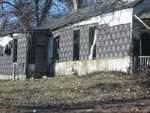


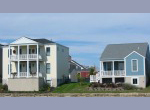


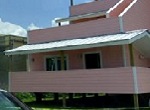


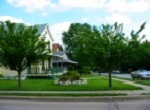


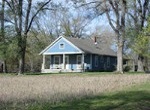


Neighborhood reputation spreads quickly, and that usually comes from the neatness and quality of the homes. If the residential stock is all the same, people somehow get the idea your area is boring. But if there is an eccentric mansion next to what the real estate industry calls a cottage, you do not present a coherent image.
The task is to steer the right course between blandness and a neighborhood that is too varied to be memorable. All the while the housing must appear well maintained.
Not to mention, a neighborhood needs the right number of houses, apartments, and condominiums in the right sizes for the households you can attract. That stands as your challenge, whether you are a community organization, leader, or activist.
The only way to keep your neighborhood marketable is good old-fashioned persuasion. You have to convince property owners, landlords, and developers that your neighborhood is worth their investment.
As developments mature, even homeowners association (HOA) boards need to be aware of these dynamics.
Below we give very brief overviews of the following topics:
- The spiral of property decline and its key role in destabilizing neighborhoods
- Neighborhood revitalization and restoration
- Home affordability
- Rural home maintenance and development
- Issues in small cities and towns
- Current issues (tear downs and monster houses, foreclosure neighborhoods, new urbanism). See our other pages for an overview of government homeowner or renter assistance subsidizing owners or renters, both of which are applicable to the U.S. only. These latter pages will be updated as programs and emphases evolve.
Neighborhood Revitalization and Housing
Perhaps you are in neighborhood revitalization mode because some homes and/or other buildings need maintenance, updating, or simply more buyers looking. Especially in these neighborhoods, we think that conducting a housing condition survey, even if it must be done by volunteers from the neighborhood association, is extremely worthwhile in helping everyone visualize where maintenance-related issues are most severe.
The question to ask is why the market is not upgrading the neighborhood automatically. Perhaps regional factors are bringing stiff competition or a population exodus, you have too many homes of one type, or you have a concentration of poverty with too high a proportion of low-income renters or homeowners.
Restoring communities--whether translating a good building back to its historic reference or simply repairing and upgrading--is hard work. However, neighborhood associations can really help. Check out our tips on stimulating home renovation, or what is called estate renewal in the U.K. For awhile a homeowner information sharing exchange operated in one of our home cities where restoring large old homes became popular. Periodic Saturday afternoon tip swapping sessions often ended in barbecue.
Then you need to look carefully to see if you can form a local historic district. That would help you prevent "remuddling" of the outside of the structures. By now, many of the potential historic districts have been discovered in larger cities, but small cities and towns may be overlooking the obvious. You want a historic district if the potential exists, because it will help preserve and even elevate property values. And it will help prevent future irreversible design changes.
As the restoration and revitalization is progressing, you'll need to take an aggressive stance toward anyone that doesn't add to the effort by keeping up their property.
The catch is that what constitutes "not keeping up their property" varies from place to place. In some places, putting out a political sign is bad form. The neighborhood version of war might occur when someone puts an old car up on cement blocks and leaves it there, or maybe most neighbors would regard that as no big deal, depending on the culture.
Your solution could be as close as code enforcement, and you should check out that option.
But if code enforcement does not work, what you need is a neighborhood watchdog. Not a neighborhood watch for crime, but a watchdog person or committee to report on problem properties. Form a committee and write polite letters to the owners telling them just how they are violating the neighborhood's sense of propriety. Some people like this task; it's akin to the appeal of gossip or meddling.
A softer approach in a problem property neighborhood is to bring in the artists. We describe one of the fastest-growing trends in community development on our community cultural development page.
Affordability of Homes for Your Workforce
If your issue is extensive low-income demand and insufficient middle income demand, perhaps you would be successful with new infill using a mixed-income strategy. Infill is just jargon for adding new construction where there are empty lots in a mostly developed neighborhood.
Where you have the right conditions (large public buildings, highway underpasses, warehouses, empty buildings, or waterfronts, for example), you may have a consistent homeless problem. You can't ignore this; you have to deal with it, for the sake of your neighborhood. People don't want to be pan-handled, and they don't want to see or interact with the homeless, who often are just ordinary folks who had a string of bad luck.
Where you have homelessness, you may have squatters in empty buildings. This is undesirable from a potential fire standpoint. Such buildings can harbor criminal activity and stolen loot, although most squatters are just trying to survive. But do your share to help end homelessness.
If your neighborhood is faced with gentrification, meaning that newcomers are driving up residential prices for both owners and renters, that trend could drive out existing residents. You may want to take swift and assertive action to preserve the social mix.
With a mixed income approach to affordability, often you can hide the fact that there are many low-income folks and avoid the stigma. Affordable housing doesn't have to mean bad design. Americans should research European solutions much more. A distinctly American solution may be what we call the "big house" solution, where we build three or four apartments into what appears on the exterior to be a large single-family dwelling.
Four apartments in a building could consist of one large unit with luxurious finishes, and three smaller apartments using much more modest materials. In fact, maybe the large unit is owner-occupied. It's hard to find a developer who wants to experiment or do anything the least bit different. You may need a nonprofit developer when you want to buck current trends.
Another promising approach is allowing accessory dwelling units, such as garage apartments, to be developed. These ADUs are especially appropriate in markets where housing is expensive or scarce, but check out the multitude of multi-generational benefits.
Often people begin the exploration of co-housing with the idea that the shared facilities, which vary with each development, will somehow cut the cost per unit and result in better affordability. Occasionally it turns out that way, but usually not. There are other good motivations for living in intentional community and making your own extended family though.
Rural Dwellings
The most common problem in rural areas is uneven maintenance, and you have to handle this with as much tact and community boosterism as you can manage. Form an organization, have a committee confront the offenders gently but firmly, and offer to help--especially if owners are senior citizens. A community painting party at a rundown house may do wonders for the look of the road. Try to get federal community development dollars to help with exterior repairs.
If a rural community needs more than a few new units at a time, take a look at cluster subdivisions, also known in some contexts as conservation subdivisions. The housing can be clustered relatively close together with a much larger common ground at the outside edge of the development next to agricultural land or open space.
Our rural homes page contains many more ideas about adding to supply and affordability in rural areas, plus handling the over-supply problem also.
Special Considerations About Residential Quality in Small Cities and Towns
Everything you've been reading so far is relevant to you. You probably have a mixture of:
- Neighborhood revitalization needs or historic district potential in isolated parts of the community
- Affordability issues
- Rural-like fierce independence about whether property owner cleanliness standards should apply, as well as reluctance to talk with property owners about offending buildings or lots
- A demand for sane quantities of new abodes, if you're among the lucky ones where there is market demand.
- Need for infill homes on scattered lots or even in certain whole neighborhoods
Pick and choose from the other links on this page that will help in particular neighborhoods, and browse other parts of the site as well. But the small town character page is especially for you.
Some Current Related Topics
1. Foreclosure Impacts
The number of foreclosures jumps up and down as the economic backdrop changes. However, when there is a substantial increase, entire neighborhoods may suffer when the percentage of bank-owned properties increases.
So if and when there is a foreclosure, that means that some residential properties are going to be become abandoned homes, and if there are enough of them in the same vicinity, you're going to have to endure too much vacancy while the market absorbs all the newcomers--if it ever does.
If it is a local bank that has foreclosed, you might be able to work with it to care for the property well and dispose of it quickly. During and after the 2008-2009 financial system crisis, many banks started the foreclosure process and then didn't follow through, creating so-called "zombie foreclosures." This was especially troubling for neighborhoods because the legal limbo prolonged the uncertainty and waiting period for a property to be passed to someone who could afford the upkeep.
For larger regional and national-scale banks, your problem can be simply finding the right person to talk to. Just don't ignore the problem if foreclosures begin to stack up again in the future.
2. New Urbanist Development
A very encouraging pro-community movement swept across America beginning in the late 1980s. It's called new urbanism, or the developments are said to be new urbanist. This movement is still ongoing, although now it seems we hear less discussion about it. Nonetheless, driving around in my community, I see substantial influence on the way the new homes and streets are configured.
The proponents of this movement, which can take on messianic tones, have a credo that they believe will cause new developments to be designed in a way that promotes sense of community, traditional American vernacular architecture, and walkability and transit use with a de-emphasis on cars.
This cause is all very righteous, and we support it wholeheartedly. Just don't let someone who is overheated about the matter sell you on a new urbanist development where (a) no new development is needed at all because the old urbanism is going begging for buyers, and (b) where basic environmental conditions for building are inappropriate. In other words, new urbanism isn't a good excuse for sprawl.
Due to interest in green building materials and considerations, we added the above page to stimulate your thinking on this topic.
4. Naturally Occurring Retirement Communities
A NORC is a community where long-time owners or renters have aged so that in their separate and separately owned residences, there is a high incidence of elderly people. The NORC concept is important because it may lead to emphasis on aging in place housing stock modifications and universal design, as well as a different palette of municipal services.
5. Tear Downs and Monster Houses
Another issue that is hot in some neighborhoods happens when you live in a nice middle class neighborhood. It's been settled for 20, 30, or 50 years and almost everyone keeps up their property. You're close to an attractive destination, maybe a newly trendy real estate market.
Then suddenly someone buys a lot and tears down a perfectly good house. A new one starts to rise, and it's twice as big as yours. If this sounds familiar, read more about tear downs.
6. Minor Trend Toward Accepting Greater Density
Although we placed the page about the small "Yes, In My Backyard" (YIMBY) movement in the section about urban sprawl, it also is relevant to housing policy. If you live in an expensive location, you may be hearing about this, and some insightful leaders in your community may be talking about this principle. Check it out.

Join USEFUL COMMUNITY PLUS, which provides you monthly with short features or tips about timely topics for neighborhoods, towns and cities, community organizations, rural environments, and our international friends. Unsubscribe any time. Give it a try.