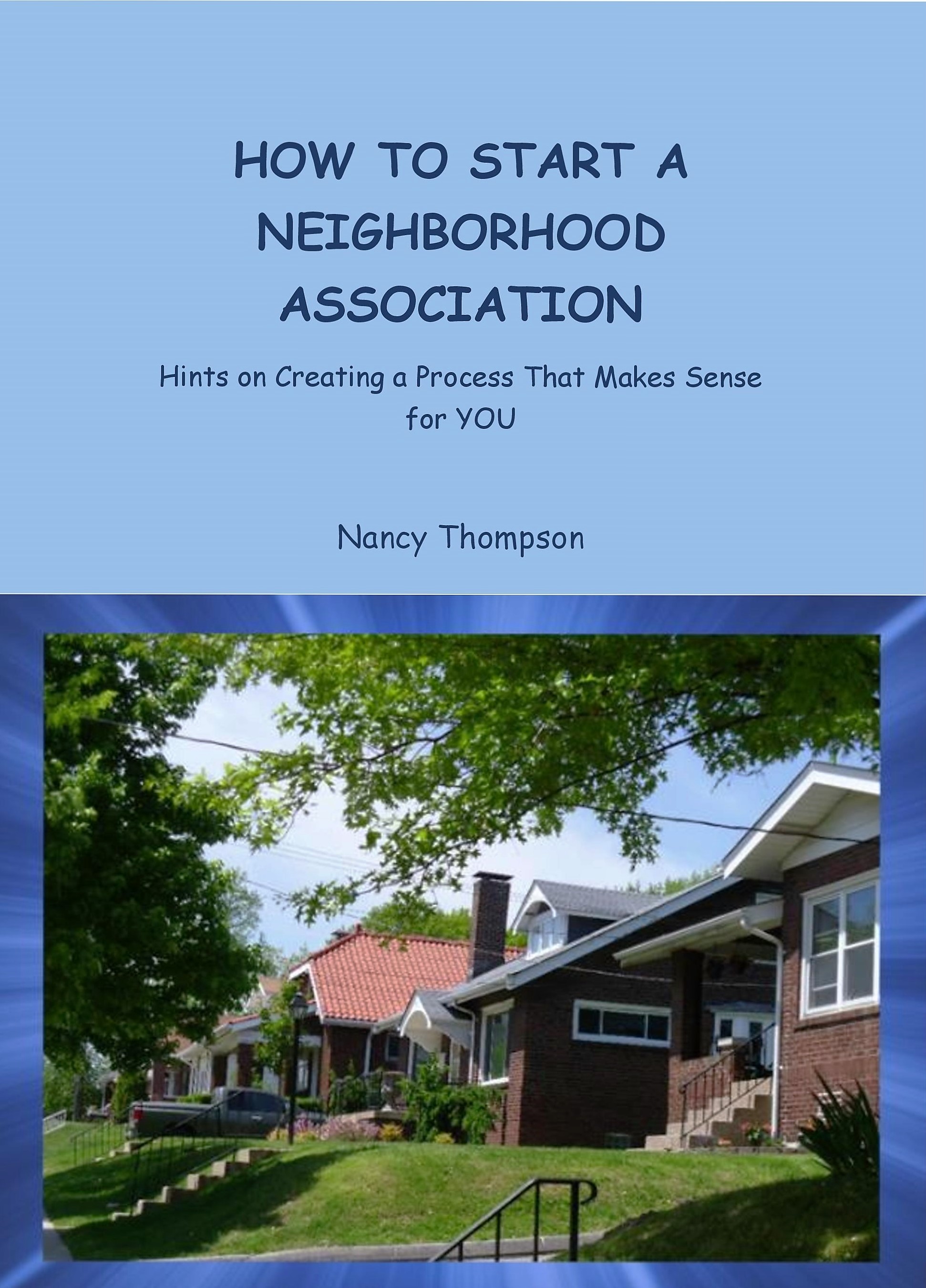
Community Organizations Are Vital Forces for Change

Last Updated: July 5, 2023
Community organizations help to stabilize, preserve, and revitalize urban, suburban, and rural areas alike. Both permanent and temporary neighborhood groups form
and fall apart frequently. Let us share some of our experience to help you navigate this world.
The idea of a neighborhood association or block group comes up when someone wants to get to know neighbors, when there are problems to resolve, or when new opportunities arise. Or you may have become a homeowners association member automatically when you bought a condo or home in a development that owns common ground.
This section of the site launches you into exploring types of community
groups and the organizational issues they face. This article continues after the grid of links below. If uncertain what to choose, use the site search feature at the top or bottom of the page.
Topics in This Section: How to Start a Petition -- How to Start a Community Development Corporation -- How to Fundraise -- How to Fight City Hall -- Community SWOT Analysis -- Neighborhood Associations -- How to Start a Neighborhood Association -- Block Units -- Community Anti-Drug Coalitions -- Ideas for Sister Cities--Neighborhood Advocacy -- Power Mapping for Neighborhoods -- Neighborhood Boundaries -- Neighborhood Publicity Strategies -- Rural Neighborhood -- Homeowners Association -- Nonprofit Board Development -- City Planning Consultants -- Local Government Relations -- Rural Community Development -- Asset-Based Community Development -- Community Action Agencies -- Community Development Grant Narratives -- Community Development Evaluation
Topics in This Section:








Sometimes effective community organizations are just a hope if
not many folks in the area seem interested. Americans are not as
committed to voluntary associations as when the Frenchman Alexis de
Tocqueville wrote about that subject in the 1830s. A temporary alliance
may fit your needs just fine, if you feel unable to achieve a more permanent solution.
Nonetheless, worldwide we notice these four factors supporting the need for organizing:
1. Small cities and towns almost always benefit from community organizations that involve people besides the traditional rulers.
2. Sub-areas of cities should almost always define neighborhood boundaries, start a neighborhood association, and maintain thriving and effective neighborhood associations, starting small and informal. The page gives plenty of detail.
3. Many suburban neighborhoods now are old or obsolete enough to need to band together. Block units can be just as effective in suburbs as in older and more dense parts of a city.
4. Rural neighborhoods also can improve their appearance and functioning through boundary definition and shared problem-solving.
Starting a Community Organization
Don't get all too worried about organizational issues if you're just starting up, although we provide plenty of information about those topics. We think that a low degree of formality works best in most community organizing.
The asset-based community development approach should be the basis of organizing, and is great at involving grassroots people who haven't done something similar before.
Often a temporary community organization is all that you can sustain. To avoid frustration and burnout yourself, recognize the possibility that the group won't last forever.
If you've tried and failed to find people who are interested in community organizations, people may not have the confidence necessary to act. If this describes your community, just try to find a few people who want to improve the neighborhood, and move ahead with some projects.
Keeping Community Building Fun
Sometimes your purpose is really serious, like life and death.
But social and celebration experiences are important too because they increase trust and are pivotal in building a sense of community--the idea that this place is special and deserves our support. Only then will we have a shared sense of place. And in fact, community organizations can be a lot of work, so you want to reward your volunteers and members occasionally with something light-hearted.
In fact, we've built a page where you can show off your street parties and see others! Please share.
Organizing for Results from Government and the Metro Area
Rather than investing effort in officers and rules in the early stages of your organization, you will be better served by building up your local government relations, if government can assist you in resolving the issues that bring you together.
Our experience is that even if you oppose actions of an elected official, you should keep the relationship as civil and orderly as possible. It's worth learning about how to start a petition as a simple way to show neighborhood solidarity. Sometimes numbers count more than eloquence.
If you find you must, learn how to fight city hall. If you need to persuade or mount a serious campaign to get different results, you will want to learn about power mapping and how it applies to neighborhoods.
But to be more proactive, learn about and practice neighborhood advocacy long before you need to deal with a negative perception from the broader community or the media.
Communicating About Your Community
The second valuable activity for your community organization is communicating your message, both internally and externally as needed. Good relationships with the individuals who write the news and social media are critical to your success.
Even if you really think your local media give you a raw deal, be nice to them. They have the power to make you look really good or really bad.
For your internal audience, your members, you need some type of homeowner newsletter, which usually takes the form of emails at least monthly, at a minimum. (That's just our title--renters need to receive the newsletter and know what's happening also!)
It can be electronic or paper, weekly, monthly or occasional, mailed or delivered, fancy or plain, but accurate information on community issues is prieless.
Growing Your Own Leaders
In some areas, where the population is not highly educated, nonprofit board development will be a major challenge for your community organization.
In almost every area of the U.S. an extension service from the state university or some similar organization that may be able to provide individualized training in leadership or point you to other groups that offer that service.
You should not have to pay for expensive business leadership training. And don't overlook the free training that comes by networking with other community associations in your area or state. As your neighborhood association grow more sophisticated, take advantage of opportunities to attend statewide or even national conferences.
Don't overlook the potential of touting the benefits of volunteerism to your community and advertising your particular opportunity. Often it's especially productive to recruit senior citizen volunteers; our page gives you some management tips and helps retirees ask the right questions about volunteering.
Later Steps: Money, Planning, and Expert Help for Neighborhoods
Sooner or later, community organizations need some money. In areas where income is level and adequate, such as subdivisions or planned communities, you might simply charge each household for participation in each event. Of course that is what a homeowners association does.
But in most urban and rural settings, that isn't practical. Before you organize your bake sale, car wash, or raffle, consider how to fundraise from a more comprehensive point of view.
If you see yourselves as a permanent community organization, after a year or so you may want to engage in some strategic planning for your association. In strategic planning, a good technique is the community SWOT analysis.
The acronym stands for Strengths, Weaknesses, Opportunities, and Threats. You can do that on your own or ask for help from a trained facilitator or one of your members who has relevant experience in the
Strategic planning for the organization is different from community planning, an entire section of the website.
Understanding the Need for Technical Assistance
Whether you are planning or fundraising, or simply addressing the issue that caused you to come together, you may need what is broadly called technical assistance. This umbrella term describes help from an outside person with training or education pertinent to your issue.
Look for help when you don't know what to do next, disagree internally, or observe that your results are not as good as hoped.
But if you want detailed, prolonged, and personalized attention, you will have to learn about consultants. The term consultant usually means a person or business that you pay for services. So a consultant becomes an option when you have a significant amount of cash, or receive a grant.
Our page on how to hire city planning consultants also would help with other types of consultants as your organization progresses to meaningful community improvement projects.
When Neighborhood Problems Are Overwhelming
If the private market is broken in your area, you may need to start a community development corporation, and thoughts on that subject are included in this section.
For communities where the poverty rate is high, your local community action agency is an important type of community organization with which you should build a relationship.
If your community is suffering from devastation due to the direct and indirect effects of drug use, we recommend forming community anti-drug coalitions. See our page for details.
Peer Learning for Community Groups
Recently we created a page on this site relating some of our ideas for sister cities, which is a dimension of peer learning in which your town could be paired with a city in another nation. When the culture of your city just seems stuck, and everyone from the leaders on down to the grassroots seems to lack self-awareness and perspective, sometimes learning from the international scene is the best remedy.
On this website, you can learn from each other as you share your stories and photos with us. You can ask a question and receive free advice from our editors or from other visitors. Either way, we look it over before it's live.
And on the community development ideas page, you can share some of your success stories or see what others have suggested and experienced.

Join USEFUL COMMUNITY PLUS, which provides you monthly with short features or tips about timely topics for neighborhoods, towns and cities, community organizations, rural environments, and our international friends. Unsubscribe any time. Give it a try.
Recent Articles


-
What is the smallest lot size we should have in our suburb?
Apr 20, 24 10:50 AM
April 15, 2024 Visitor Question: We are a typical American suburb developed in the 1950s and 1960s. Our climate is moderate and our city is thriving economically. -
What should we do about an ugly bioswale?
Apr 19, 24 01:32 PM
April 19, 2024 Visitor Question: Our town wanted to have some better flood control along a creek that is ordinarily very small. The problem is that -
Project Selection in Neighborhood Associations
Apr 03, 24 01:41 PM
 Many neighborhood associations should limit their activities to sharpen their focus. However, some community organizations need more projects to add excitement.